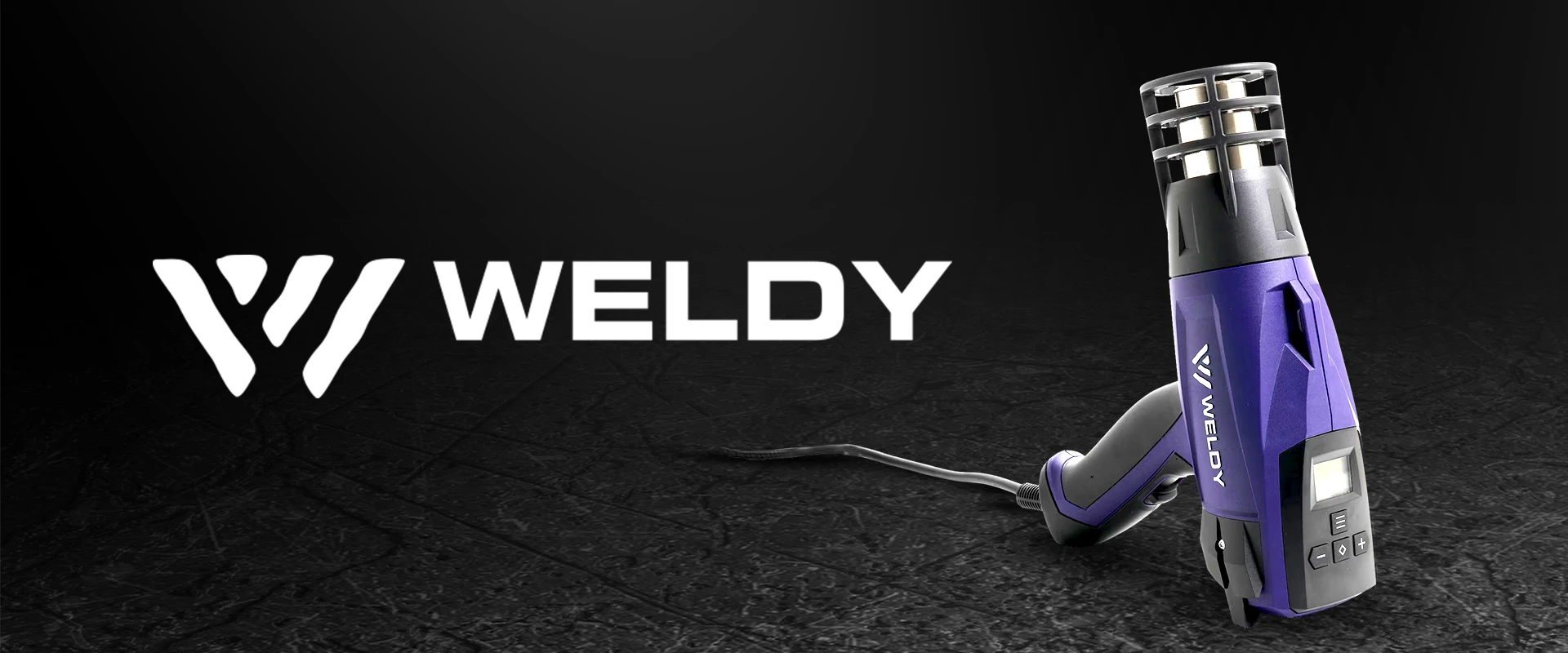
We operate as a structured industrial distributor for Weldy hot air welding machines, extrusion welders, and associated spare parts across India.
This page is intended for technical buyers, procurement heads, project contractors, and OEM users evaluating vendor suitability before RFQ stage.
What a Weldy Distributor Should Deliver at Decision Stage
Technical Coverage, Not Just Brand Listing
A distributor must be able to:
Segment models by application
Clarify electrical compatibility (230V / site conditions)
Supply consumables and spare parts
Coordinate warranty handling
Dispatch Pan India without project delay
We structure supply around application category rather than generic product listing.
Application Suitability
Where Weldy Equipment Is Typically Deployed
Weldy hot air and extrusion welding systems are used in:
Geomembrane lining projects
Waterproofing membrane welding
PVC roofing systems
HDPE sheet fabrication
Tank and duct fabrication
Tarpaulin and technical textile welding
Model selection depends on sheet thickness, site mobility, seam consistency requirement, and power availability.
Applications Page
In project procurement, equipment selection begins with application clarity. As a structured distributor for Weldy systems, we segment supply based on field deployment rather than generic product listing.
For distributor capability and supply structure, refer to our main page: Weldy Distributor India.
Geomembrane Lining Projects
Used in:
- Landfill lining
- Water reservoir lining
- Mining ponds
- Effluent treatment plants
Operational Requirement:
- Long, continuous overlap seams
- Consistent welding pressure
- Stable temperature control
- Field mobility
Automatic hot air welders are typically deployed for production seams, while hand guns are used for detailing and patch repairs.
Roofing & Waterproofing Membrane Welding
Used for:
- Commercial roofing
- Industrial shed waterproofing
- TPO / PVC membrane overlap
Operational Focus:
- Controlled seam width
- Uniform travel speed
- Edge finishing accuracy
Model selection depends on membrane thickness and site access constraints.
HDPE Tank & Duct Fabrication
Used in:
- Chemical storage tanks
- Industrial scrubbers
- Ventilation ducts
Requirement:
- Structural weld strength
- Compatibility with welding rod
- Controlled extrusion output
Extrusion welders are generally required for sheet thickness beyond standard hot air overlap welding range.
PVC Fabrication & Technical Textiles
Used in:
- Tarpaulin fabrication
- Flex banner welding
- Inflatable structures
Precision and nozzle selection become critical in thin sheet welding.
Application-Led Procurement Approach
Incorrect equipment selection usually originates from unclear application parameters.
For structured selection and Pan India supply capability, see: Weldy Distributor India.
Selection Mistakes Guide
Procurement failures are typically specification-driven, not brand-driven.
For verified supply and technical validation support, refer to: Weldy Distributor India.
Mistake 1: Selecting Hand Gun for Production Seam Work
Hand welding guns are not designed for long, repetitive seam welding where speed and seam uniformity matter.
Automatic welders reduce inconsistency and operator fatigue.
Mistake 2: Ignoring Power Stability
Field generators with unstable voltage reduce heater life and cause temperature fluctuation.
Always validate:
- Voltage range
- Load sharing
- Extension cable capacity
Mistake 3: Underestimating Spare Planning
Projects exceeding 30 days should include:
- Spare heating elements
- Backup nozzles
- Carbon brushes
- Drive rollers (for automatic units)
Mistake 4: Mismatch Between Sheet Thickness & Output Capacity
Extrusion welders are required for thicker structural joints.
Attempting structural welds with hand guns compromises joint strength.
Mistake 5: Ignoring Operator Skill Level
Automatic welders reduce dependency on manual consistency.
Hand welding requires trained technicians.
Structured selection guidance is available through our distributor channel: Weldy Distributor India.
Comparison Guide
This is a procurement comparison guide, not a promotional summary.
For authorized supply structure, see: Weldy Distributor India.
Evaluation Parameters
|
Parameter |
Weldy Systems |
Generic Alternatives |
|
Temperature Stability |
Electronic control |
Often mechanical |
|
Spare Availability |
Structured via distributor |
Uncertain |
|
Model Segmentation |
Clear |
Limited |
|
Project Suitability |
Site-based industrial |
Mixed |
|
Warranty Coordination |
Defined channel |
Seller dependent |
When to Choose Weldy
- Field-based geomembrane welding
- Roofing membrane installation
- Medium-scale fabrication
- Projects requiring spare continuity
When Another System May Be Required
- Fully automated factory lines
- High-volume conveyorized systems
- Robotics-based welding cells
Selection should align with operational scale.
Price Factors Guide
We do not publish generic pricing without application clarity.
For structured quotation process, refer to: Weldy Distributor India.
Primary Cost Variables
- Machine Type (Hand / Automatic / Extrusion)
- Output Capacity
- Imported Component Cycle
- Spare Kit Inclusion
- Dispatch Location
- Project Volume Requirement
Hidden Cost Considerations
- Downtime from incorrect model selection
- Spare part lead time
- Generator compatibility damage
- Inadequate seam performance
Total project cost is influenced more by operational suitability than base machine price.
Installation Guide
Proper setup reduces failure rates significantly.
For equipment sourcing and support, see: Weldy Distributor India.
Pre-Operation Setup
- Verify voltage stability
- Inspect heating element
- Confirm airflow clearance
- Conduct trial weld on scrap sheet
Automatic Welder Setup
- Align overlap precisely
- Adjust pressure roller alignment
- Confirm travel speed calibration
- Maintain clean drive wheels
Extrusion Welder Setup
- Preheat base material
- Confirm rod compatibility
- Avoid moisture contamination
- Maintain correct extrusion temperature
Installation discipline directly affects seam strength.
Maintenance Guide
Daily Checks
- Nozzle blockage inspection
- Air intake cleaning
- Cable integrity inspection
Weekly Checks
- Carbon brush inspection
- Heating element condition
- Roller wear assessment
Storage Protocol
- Dry environment
- Cool-down before packing
- Protected nozzle storage
Most breakdowns occur due to overheating from airflow obstruction.
Industry-Specific Use Case
Project Example
Site: 20,000 m² landfill lining
Sheet Thickness: 1.5 mm HDPE
Estimated Seam Length: 24,000 meters
Operational Planning:
- 2 Automatic Welders for production seam
- 2 Hand Guns for detailing
- 1 Extrusion Welder for patch repair
- Spare heating elements (minimum 2 per unit)
- Backup nozzles
Estimated Welding Window:
Based on 2.5 m/min average production speed, total production time ≈ 160 hours.
Without backup spares, delay risk increases significantly.
Operational Risk Mitigation
- Generator voltage regulator
- Weather protection during welding
- Seam testing protocol
- Spare inventory planning
Distributor coordination is critical before mobilization.
Product Categories We Supply
1. Hot Air Hand Welding Guns
Used for:
Detail welding
Corner joints
On-site repair
PVC and thin thermoplastics
2. Automatic Hot Air Welders
Used for:
Long seam geomembrane welding
Roofing membrane overlap welding
Uniform seam quality requirement
3. Extrusion Welders
Used for:
Thick HDPE fabrication
Tank manufacturing
Structural plastic joints
4. Spare Parts & Consumables
Heating elements
Nozzles
Drive rollers
Carbon brushes
Pressure rollers
Technical Specification Framework
Typical Hot Air Welder Specification Range
Voltage: 230V AC
Frequency: 50/60 Hz
Temperature Range: Up to 600°C (model dependent)
Airflow Control: Adjustable
Welding Speed (automatic models): Variable
Sheet Thickness Suitability: 0.5 mm - 3 mm (application dependent)
Typical Extrusion Welder Specification Range
Output Capacity: Application dependent
Compatible Rod Diameter: 3-4 mm
Temperature Control: Electronic regulation
Material Suitability: HDPE / PP
Exact specifications vary by model and are confirmed during enquiry stage.
Selection Guidance
How to Select the Correct Model
Define material type (PVC, HDPE, TPO, etc.)
Confirm sheet thickness
Identify seam length requirement
Determine site power availability
Assess mobility constraints
Evaluate seam consistency requirement
If the application involves long straight seams exceeding 50 meters daily, automatic welding machines are operationally more consistent than hand guns.
For tank fabrication or structural plastic welding above 4 mm thickness, extrusion welding is generally required.
Capacity Calculation Example
Example – Geomembrane Project
Project Area: 10,000 m²
Average Seam Length per 100 m²: Approx. 120 meters
Estimated Total Seam: 12,000 meters
If automatic welder average speed: 2–3 meters/minute
Operational welding time:
12,000 ÷ (2.5 m/min average) = 4,800 minutes ≈ 80 hours
This determines:
Machine quantity requirement
Spare heating element backup planning
Operator shift planning
We assist buyers in validating such operational calculations before finalizing quantity.
Material Compatibility Table
|
Material Type |
Hot Air Gun |
Automatic Welder |
Extrusion Welder |
|
PVC |
Yes |
Yes |
Limited |
|
HDPE |
Limited |
Yes (sheet) |
Yes |
|
LDPE |
Limited |
Yes |
Yes |
|
PP |
Limited |
Limited |
Yes |
|
TPO |
Yes |
Yes |
No |
Final compatibility depends on thickness and application condition.
Failure Conditions to Consider
Weldy machines should not be selected if:
Power supply is unstable without regulation
Generator voltage fluctuates excessively
Work environment contains high airborne dust without filtration planning
Operator is untrained in seam pressure control
Most field failures arise from:
Incorrect nozzle selection
Overheating due to airflow blockage
Carbon brush neglect
Running machine continuously without cooldown interval
Distributor role includes advising preventive handling to reduce downtime.
Who Should NOT Buy Weldy Equipment
Buyers requiring heavy industrial automated production lines
High-volume factory conveyor welding systems
Non-thermoplastic welding applications
Users without trained operator availability
Weldy systems are best suited for site-based thermoplastic welding and medium-scale fabrication.
Operational Usage Considerations
Always stabilize power source before operation
Pre-test seam on scrap material
Maintain airflow clearance
Store heating elements in dry condition
Maintain spare nozzle inventory for projects above 30 days
We support spare planning at RFQ stage.
Commercial Clarity
GST invoicing provided
Pan India dispatch coordination
Model confirmation before dispatch
Spare parts supply continuity
Warranty handled through structured documentation process
Lead times depend on stock position and import cycle where applicable.
Distributor Comparison Snapshot
|
Evaluation Parameter |
Structured Distributor |
Marketplace Seller |
|
Model Segmentation |
Clear |
Often unclear |
|
Spare Parts Support |
Defined |
Uncertain |
|
Technical Clarification |
Available |
Limited |
|
Warranty Handling |
Structured |
Seller dependent |
|
Project Guidance |
Yes |
No |
Buyers executing project-based procurement typically require structured distribution rather than listing-based sourcing.
Selection Checklist (Pre-RFQ)
Material confirmed
Thickness confirmed
Power supply verified
Seam length estimated
Operator availability confirmed
Spare kit planned
Delivery timeline defined
Incomplete project data leads to incorrect model selection.
High-Intent FAQs
Is Weldy suitable for geomembrane welding in Indian site conditions?
Yes, provided voltage stability is ensured and correct model selection is made for sheet thickness.
Do you supply spare heating elements and nozzles?
Yes. Spare parts and consumables are supplied to maintain continuity.
Can automatic welders handle roofing membranes?
Yes, if membrane material and thickness fall within operating specification.
Is extrusion welding required for HDPE tank fabrication?
For thickness above standard sheet welding range, extrusion welding is typically required.
Do you dispatch outside metro cities?
Yes. Dispatch coordination is managed Pan India.
Social Share: