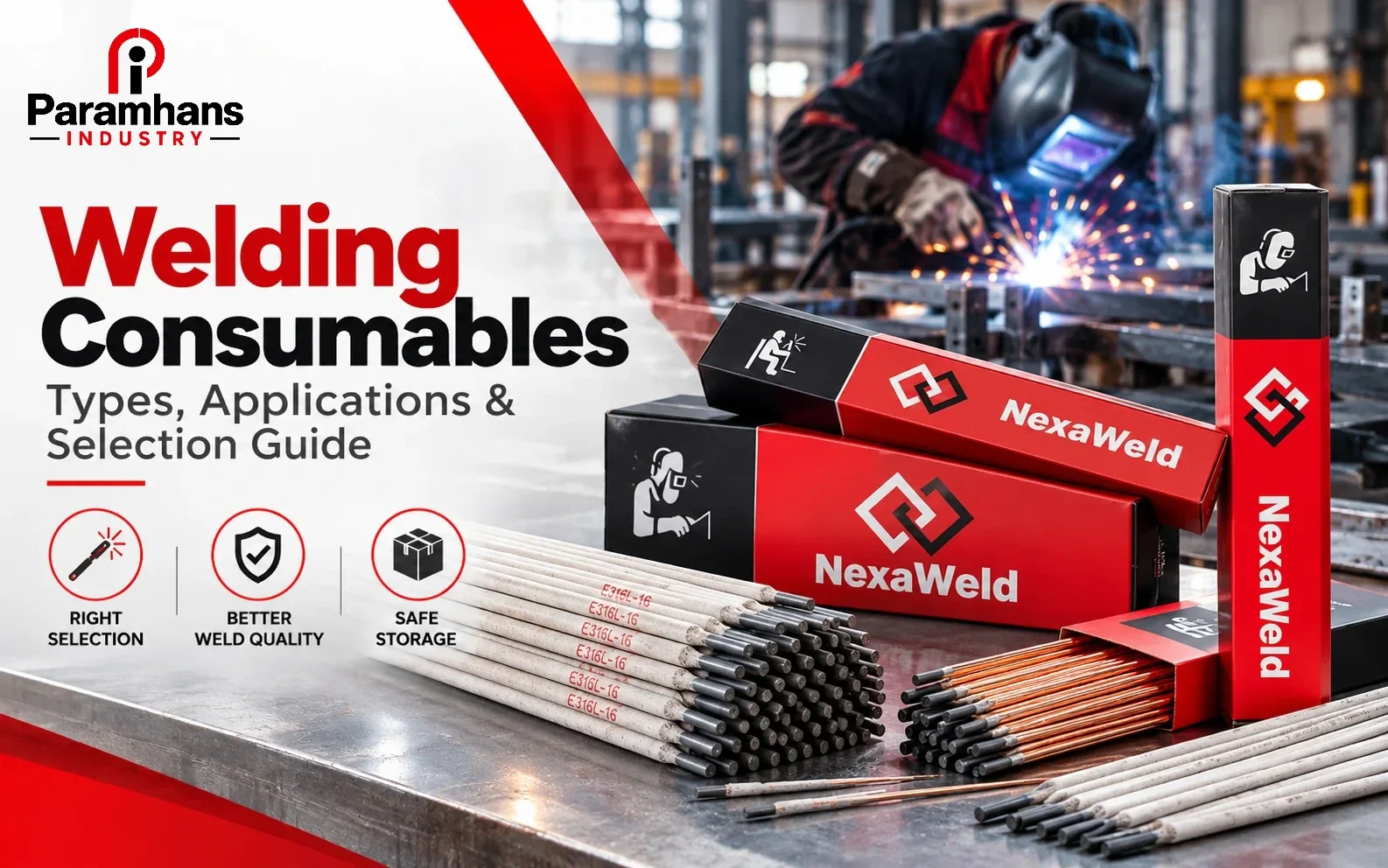
Paramhans Industry
October 14, 2026
Welding consumables should be selected from the approved welding process, base materials, joint design, service conditions, welding position and qualified procedure. The familiar product name is not enough. Electrode or wire classification, diameter, shielding, polarity, heat input, mechanical properties, diffusible hydrogen controls and batch documentation must suit the actual job.
A reliable purchase specification identifies the exact classification or approved brand, size, packaging, quantity, certificates, storage controls and delivery condition. Substitutions should be reviewed by welding engineering or the responsible authority before use. Correct selection protects weld quality; correct storage and handling preserve that quality until the arc is struck.
What Counts as a Welding Consumable
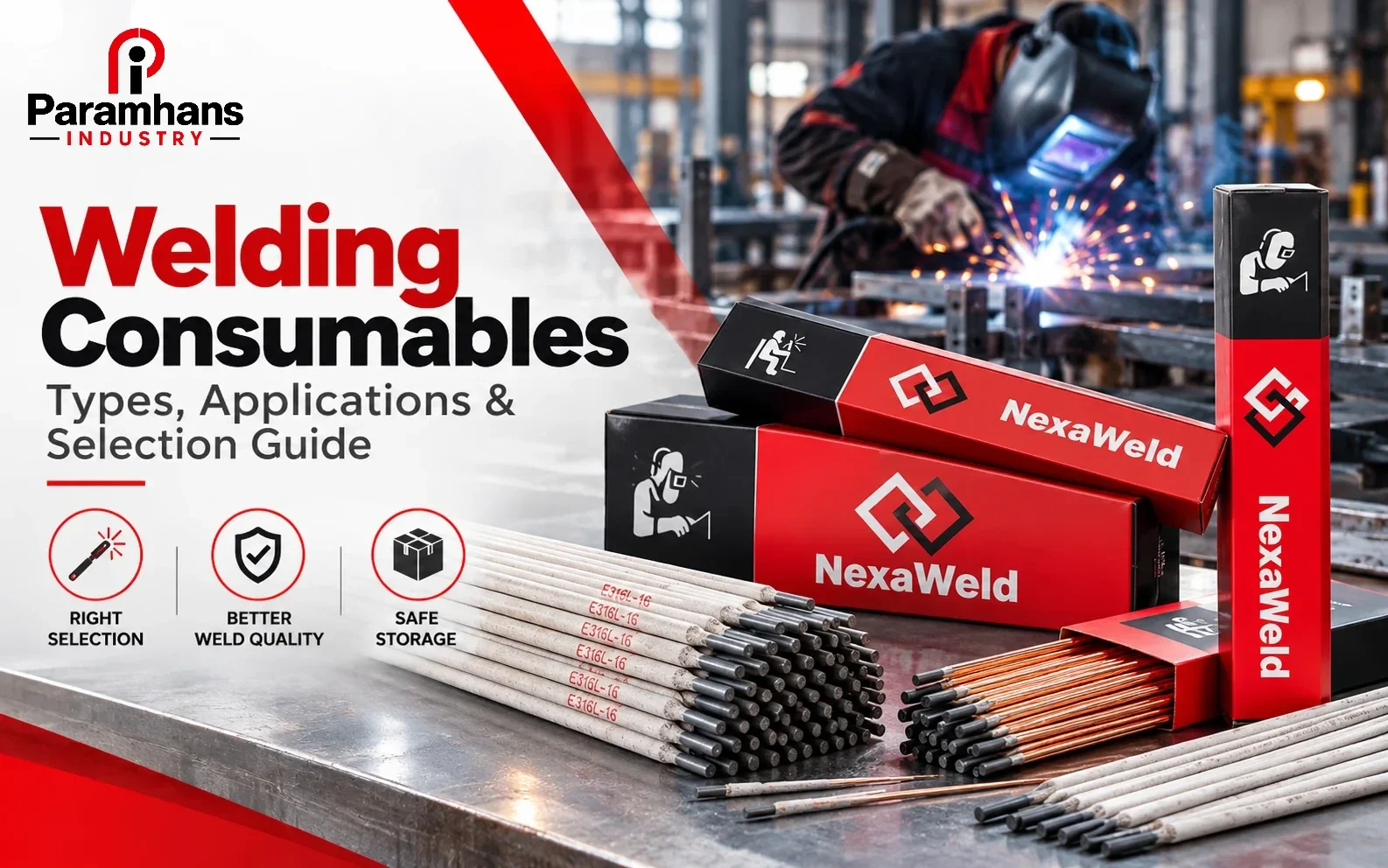
Consumables include covered electrodes, solid wires, flux-cored wires, metal-cored wires, filler rods, submerged-arc wire and flux, brazing filler and associated process materials. Shielding gases, backing materials and tungsten electrodes may also sit within the purchasing category even though their role and consumption differ.
Paramhans Industry presents a broad welding consumables portfolio alongside industrial products and support. Buyers should confirm the precise offered manufacturer, classification, size and documentation rather than treating a website category as a technical approval.
Main Consumable Families and Their Uses
| Consumable family | Typical process or use | Selection focus |
|---|---|---|
| Covered electrode | Manual shielded metal arc welding | Classification, coating, position and storage |
| Solid wire | Gas metal arc welding | Wire chemistry, gas, transfer and feedability |
| Flux-cored wire | High-deposition or outdoor/structural work | Gas-shielded or self-shielded type |
| Metal-cored wire | Productive mechanised fabrication | Procedure window and shielding gas |
| Filler rod | Gas tungsten arc welding | Cleanliness, chemistry and diameter |
| Submerged-arc wire and flux | Long mechanised seams and heavy fabrication | Approved wire-flux combination |
| Brazing filler | Joining or repair below base-metal melting | Alloy, clearance and service temperature |
Covered welding electrodes
Covered electrodes combine a metal core with a flux coating that supports arc stability, shielding and slag formation. Classification can indicate strength, position, coating or current characteristics, but the project specification and procedure determine acceptability. Coating damage or moisture exposure can invalidate otherwise correct material.
Solid MIG or MAG wires
Solid wire provides continuous feeding and high productivity. Selection must coordinate wire chemistry with base metal, shielding gas, transfer mode, power source, feeder, contact tip and joint. Surface condition and winding quality affect feeding. The same diameter can behave differently when chemistry, gas or parameters change.
Flux-cored and metal-cored wires
These tubular wires can support high deposition, positional work or specific mechanical performance. Determine whether shielding gas is required and whether the procedure supports the offered wire. Fume, slag, storage and parameter control differ from solid wire and must be included in the work plan.
TIG filler rods
Filler rods are selected for base-metal compatibility and service requirements. Clean storage and handling are important because the process offers little tolerance for contaminated filler. Rod diameter should suit joint thickness, position, heat input and welder technique under the approved procedure.
Submerged-arc wire and flux
Wire and flux operate as a qualified combination. Flux type, reconditioning, recovery, mixing and moisture control affect weld properties. Do not replace only one part of the approved combination without technical review and, where required, procedure requalification.
Begin with the Base Metal and Service Condition
Identify base-metal specification, grade, thickness, product form and condition. Then define design temperature, corrosion, fatigue, impact toughness, pressure, wear, hydrogen exposure or other service demands. A consumable that provides adequate room-temperature strength may still be unsuitable for low-temperature toughness or corrosive service.
For dissimilar joints, repair welds or unknown materials, obtain specialist review. Matching nominal strength is not the only objective; dilution, cracking risk, thermal expansion and post-weld treatment may control the choice. Positive material identification or further investigation can be necessary before a safe procedure is written.
Use the Welding Procedure as the Selection Authority
The welding procedure specification should state process, consumable classification, size range, shielding, polarity, position, preheat, interpass limits and parameter range. Procurement should buy against that controlled requirement. The welder should not be asked to compensate for an unapproved wire or electrode on the production floor.
A change may affect procedure qualification or project acceptance. Route alternate brands, classifications, flux combinations and gas changes through the responsible welding coordinator. Record approval so future orders do not repeat the same uncertainty.
Match Strength Toughness and Chemistry
Consumable strength should meet the design and procedure basis without creating unnecessary mismatch. Higher advertised strength is not automatically safer; it can increase cracking sensitivity or alter performance. Review deposited-metal chemistry, tensile properties, elongation and impact requirements under the specified test condition.
For stainless, creep-resistant, hardfacing or nickel-alloy work, chemistry and dilution become especially important. Confirm ferrite, corrosion, temperature or hardness needs as applicable. Use manufacturer technical data and qualified procedures rather than selecting from a broad alloy label.
Account for Welding Position and Joint Access
A consumable approved for flat welding may not suit vertical or overhead work. Position affects slag behaviour, puddle control, deposition rate and parameter window. Joint access may limit electrode length, torch angle or wire size. Include the actual fabrication orientation when preparing the bill of materials.
Mechanised productivity claims should be tested against fit-up, starts, stops, tacking and handling. A consumable with a high deposition rate can lose its advantage if slag removal, spatter, rework or access slows the complete operation.
Coordinate Power Source Polarity and Shielding
Verify current type, polarity, usable amperage, voltage, duty cycle and feeder capability. For gas-shielded processes, define gas composition, flow control and protection from draughts. Gas and consumable form one process system; changing either can alter transfer, penetration, fume, spatter and mechanical results.
Check torch, liner, drive rolls, contact tips and spool handling for wire compatibility. For portable or site work, consider wind protection, cable length, generator performance and material storage. A workshop procedure may need a different practical arrangement outdoors while remaining within approved variables.
Understand Low-Hydrogen Control
Hydrogen-assisted cracking risk depends on material, thickness, restraint, hydrogen level, stress and temperature. Where low-hydrogen practice is required, follow the project procedure and manufacturer instructions for electrode exposure, baking or rebaking, holding ovens, heated quivers and issue time. Do not invent generic temperatures or times.
Segregate opened and unopened packages and record batch, opening time, oven cycle and issue. Wet or damaged electrodes should be quarantined. Wire and flux also require moisture and contamination control appropriate to their packaging and process.
Storage Handling and Shelf Discipline
| Material | Storage concern | Practical control |
|---|---|---|
| Covered electrodes | Moisture and coating damage | Dry controlled store and issue limits |
| Solid wire | Rust, dust and damaged winding | Sealed packs and clean feeder path |
| Flux-cored wire | Moisture and seam contamination | Manufacturer-defined storage and exposure |
| TIG rods | Dirt, oil and material mix-up | Capped labelled tubes and clean gloves |
| SAW flux | Moisture, fines and mixed batches | Controlled recovery and reconditioning |
| Shielding gas | Wrong grade or connection | Identification, secure cylinders and leak checks |
Use first-in, first-out or first-expiry controls as appropriate and separate approved, quarantined and rejected stock. Store different alloys and diameters so they cannot be mixed. Retain original labels and batch information through issue to the work package.
Prepare a Complete RFQ and Purchase Specification
State the welding process, classification, approved brand status, diameter, package type, quantity, applicable specification, required certificate, batch traceability and delivery schedule. Add storage, shelf-life and packaging requirements. If equivalent offers are allowed, require a clear deviation schedule and supporting data.
Paramhans highlights industrial distribution and application support on its About Us page. Supplier experience is useful, while final approval must remain tied to the offered consumable and procedure. Use the contact page to share the controlled enquiry rather than a generic request for “welding rod.”
Evaluate Suppliers and Authenticity
Assess authorised sourcing, product storage, batch traceability, certificate handling, technical response, delivery reliability and complaint resolution. Inspect packaging, seals, labels and manufacturer identification on receipt. Suspected counterfeit or relabelled material should be quarantined and referred to the manufacturer or authorised channel.
A supplier should be able to clarify the difference between similar classifications and ask about base metal, position and service. Fast quotation is valuable only when technical identity remains controlled. Trial new sources on a defined, reviewable scope before assigning critical fabrication volume.
Incoming Inspection and Traceability
Compare purchase order, delivery note, packaging, classification, size, batch and certificates. Check for moisture, rust, damaged coatings, torn packs, mixed labels and expired or unclear material. Record acceptance against the project or workshop traceability system before release.
Maintain traceability to the level required by the contract. That may mean batch-to-job records, controlled issue slips and return reconciliation. Traceability is useful only when labels remain attached and data can be connected to weld maps, inspection reports and repair history.
Consumable Selection by Application
| Application | Important questions | Typical evidence |
|---|---|---|
| General steel fabrication | Strength, position and productivity | WPS and supplier data |
| Pressure equipment | Code, toughness and hydrogen control | Qualified procedure and certificates |
| Stainless fabrication | Grade, corrosion and contamination | Chemistry and segregation plan |
| Maintenance repair | Known material and failure mechanism | Repair procedure and inspection plan |
| Hardfacing | Wear mode, layers and final hardness | Application data and trial coupon |
| Outdoor site welding | Wind, moisture, portability and storage | Site method and environmental controls |
Control Productivity Without Sacrificing Quality
Compare deposited weld metal per shift, not wire feed or electrode price alone. Include deposition efficiency, duty cycle, changeover, slag removal, grinding, fume controls, rejection and repair. A more expensive consumable can reduce total fabrication cost if it delivers stable quality and less rework under the approved process.
Run controlled trials when changing product or process. Use representative joints, qualified personnel and defined acceptance tests. Record parameters and observations so the decision is based on evidence instead of a short demonstration on ideal plate.
Common Selection and Handling Mistakes
Avoid buying only by trade name, choosing higher strength without review, changing wire-flux combinations casually or assuming all electrodes of one diameter are interchangeable. Do not use damaged packs, mixed rods or unidentified returns. Never let an urgent delivery bypass procedure and certificate checks.
Another frequent mistake is storing consumables correctly but losing control at issue. Heated material left at the workstation, rods returned to the wrong container or wire exposed to grinding dust can undo careful procurement. The control chain must continue from receipt to the finished weld.
Welding Consumables Procurement Checklist
- Identify base metal, thickness, service and approved welding procedure.
- Specify classification, brand status, diameter, package and quantity.
- Define shielding gas, polarity and equipment compatibility where relevant.
- Request certificates, batch traceability and manufacturer data.
- Confirm low-hydrogen, moisture and storage requirements.
- Inspect packaging, markings, condition and documents on receipt.
- Control issue, returns, oven history and material segregation.
- Approve substitutions before production and retain the decision record.
Standardise Consumables Across Repeat Work
Standardisation can reduce stock, set-up errors and training complexity when the same approved consumable genuinely covers several procedures. Build a matrix linking each classification and diameter to approved base metals, joints, positions and WPS numbers. Do not force standardisation across incompatible service or toughness requirements simply to reduce item codes.
Review usage, shelf life and package size before consolidation. A larger pack may lower unit cost but increase exposure and waste. Keep alternate approved sources documented for continuity, and control the exact conditions under which one brand or classification can replace another.
Manage Site and Shutdown Welding
Field work adds humidity, wind, dust, restricted access, temporary power and transport. Plan dry storage, heated holding where required, weather protection, secure gas cylinders, clean preparation and material issue close to the workface. Confirm that portable power sources and leads can maintain the procedure range.
For shutdowns, package consumables by work order and joint count with a controlled contingency. Stage certificates and inspection requirements before mobilisation. Reconcile unused material and identify anything exposed beyond its permitted time instead of returning it anonymously to general stock.
Control Repairs and Rework Consumables
Repair welding should have an approved removal, examination and rewelding plan. Identify the original material, defect extent and likely cause before choosing filler. Repeated repairs can change heat input, restraint and local properties, so the repair consumable should not be selected merely because it is available.
Track repair rate by joint, welder, procedure, consumable batch and defect type. This evidence can reveal storage, parameter, fit-up or supplier issues. Preserve samples or packaging when a batch concern exists and coordinate technical claims before the remaining stock is used.
Review Safety and Fume Controls
Consumable selection influences fume, gases, slag and spatter, but safe welding also depends on ventilation, extraction, respiratory assessment, screens, fire prevention and work-area controls. Review safety data for the exact product and process. Confined spaces and coated or contaminated materials require specific risk assessment.
Changing from one process or consumable to another can alter exposure even when productivity improves. Include occupational hygiene and environmental teams in trials where appropriate. Technical approval of the weld does not by itself approve the method of work.
Use Consumption Data for Better Forecasting
Estimate demand from deposited weld volume, process efficiency, procedure, joint mix and realistic rework allowance. Compare this with historical issue and return records. Machine feed rate or electrode count alone can overstate useful deposition because stubs, starts, spatter and rejected welds consume material.
Trend consumption by project phase and work centre. Sudden increases may indicate fit-up problems, excessive reinforcement, parameter drift, loss or unrecorded rework. Better forecasting reduces emergency substitutions and allows batches and certificates to be planned before production.
Frequently Asked Questions
1. What are the main types of welding consumables?
Common types include covered electrodes, solid wires, flux-cored and metal-cored wires, TIG filler rods, submerged-arc wire and flux, and brazing fillers.
2. How do I choose a welding electrode?
Use the approved procedure, base metal, service requirements, position, strength, toughness, polarity and hydrogen-control needs.
3. Are welding rods and electrodes the same?
The terms are often used casually, but a covered electrode carries current and melts, while a TIG filler rod is added separately from the non-consumable tungsten electrode.
4. Can one wire be used with any shielding gas?
No. The wire, gas, transfer mode and procedure must be compatible and approved together.
5. Why does electrode storage matter?
Moisture can damage coatings and increase weld defects or hydrogen risk. Follow the manufacturer and project procedure for storage, exposure and ovens.
6. Can a higher-strength consumable replace the specified one?
Not automatically. Higher strength can change cracking risk and weld performance, so substitutions require technical review.
7. What is batch traceability?
It connects delivered material and certificates to a manufacturing batch and, where required, to the jobs or welds that used it.
8. How should TIG rods be stored?
Keep them clean, dry, capped, labelled and segregated by alloy and size. Prevent oil, dirt and cross-contamination.
9. Can opened flux be reused?
Only under the approved manufacturer and procedure controls for recovery, screening, mixing, reconditioning and moisture.
10. What should be checked during incoming inspection?
Verify manufacturer, classification, size, batch, certificates, packaging, shelf condition and signs of moisture, rust or damage.
11. When is a consumable trial useful?
A controlled trial helps compare feedability, arc behaviour, deposition, fume, cleaning and weld quality before an approved change.
12. What information should be sent to a supplier?
Share process, base metal, WPS or classification, size, quantity, certificates, packaging, storage needs and delivery schedule.
Choose Consumables That Protect Every Weld
Reliable weld quality begins before fabrication, with a purchase specification that matches the procedure and preserves traceability through storage and issue. Share the base metal, process, consumable classification, diameter, position, service condition, documentation and required quantity with Paramhans Industry. Review its industrial supply portfolio and request a product-specific quotation that identifies the exact manufacturer, pack, batch evidence and delivery scope.
Social Share:





Our Blog









Captcha